

Nanopores have emerged as a powerful tool in nanobiotechnology applications, including molecule sensing, DNA/protein sequencing, mimicking biosystems and beyond. However, the commonly used nanopores cannot meet the strong demands of various research fields, especially in nanopore protein/peptide sensing which has gained significant research attention, yet remains challenging in achieving accurate amino-acid-level identification.
The anthrax protective antigen forms a heptameric transmembrane channel under acidic conditions and serves as a biological nanopore. Its use in nanopore sensing is limited by stability and signal quality under conventional electrolytes containing potassium and sodium ions. A stable anthrax protective antigen nanopore was constructed using a pH-asymmetric organic ionic liquid electrolyte, operated under a proton-driven gating mechanism. The resulting nanopore was evaluated for electrochemical performance, chemical stability, and capacity to distinguish levorotary and dextrorotary amino acid enantiomers. The system operated without the need of enzymes, chemical reactions, or machine learning algorithms. The anthrax nanopore exhibited a single-channel open current of ~ approximately 5 pA, whereas commonly used protein nanopores display current amplitudes of tens to hundreds of picoamperes. This architecture provides a basis for chiral molecule identification via direct nanopore current readout.
This work entitled “Proton-driven anthrax protective antigen nanopore for enantiospecific discrimination of chiral amino acids via current readout” is published on《ACS NANO》https://doi.org/10.1021/acsnano.6c12067. Dr. Liang Wang (Chongqing Institute of Green and Intelligent Technology, Chinese Academy of Sciences) and Dr. Mingdong Dong (Aarhus University, Denmark) are corresponding authors. The work is supported by the National Key Research and Development Program of China, Natural Science Foundation of Chongqing, Youth Innovation Promotion Association of Chinese Academy of Sciences.
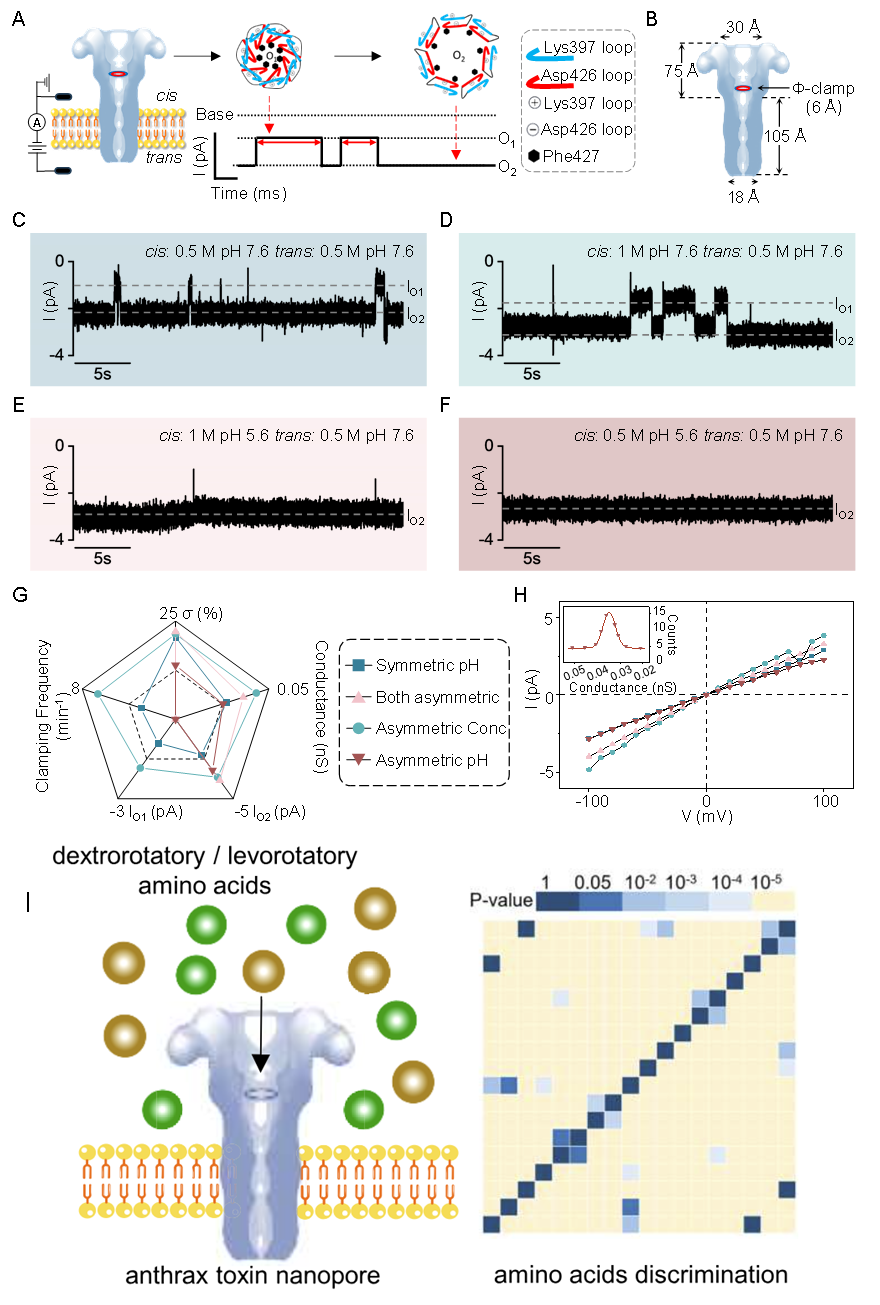
Figure 1. Construction, electrical characterization and enantiospecific discrimination of chiral amino acids using a stable anthrax nanopore.